
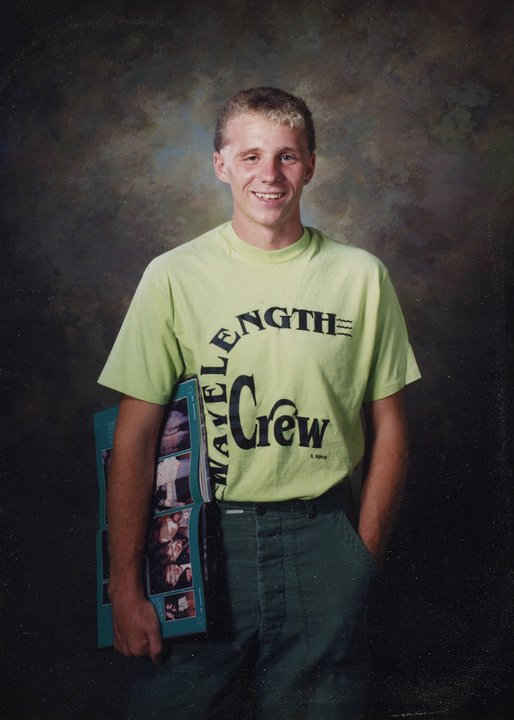
It started with a bet, an empty window, and one terrible idea.
Greenville, Ohio. 1990. The story of how a teenager talked a Master Photographer into doing senior portraits all wrong, and somehow got everything right.
My senior portrait was supposed to be a coat-and-tie photograph against a neutral background. That is how it was done in 1990. Stand still. Smile. Maybe lean against your car. I had a different idea. I wanted to be photographed sitting on a pool float in my aunt's swimming pool, wearing bright red Umbro shorts, a button-up shirt, a loosened tie, and sunglasses. My mentor told me my grandmother and my aunt would never forgive him for entertaining the idea. He photographed it anyway. And that is how I learned what senior portraits were actually for.
Thirty days in the window.
My mentor was Master Photographer Ted Grote, and Ted was serious. He started in photography in 1945 as a Coast Guard photographer and ran his studio in Greenville, Ohio, with the conviction of someone who had already photographed two generations of the same families. His front window was sacred ground, reserved for his very best work. He did not put silly pictures in his front window.
I told him the pool photograph belonged in his front window. Ted disagreed. I told him I would work for free in the studio for thirty days, and if no new clients came in asking for portraits like the pool photograph, the bet was his. He laughed. He took the bet.
Five days later, eleven high school seniors had walked through his door asking for something that did not look like anyone else's senior portraits. By day thirty, almost one hundred new senior clients had come through from eight different high schools. Ted paid me. He paid me a bonus on top.
What I had learned, and what Ted had been too good a photographer to admit at first, was that the seniors did not want a portrait that looked like everyone else's portrait. They wanted a portrait that looked like them.
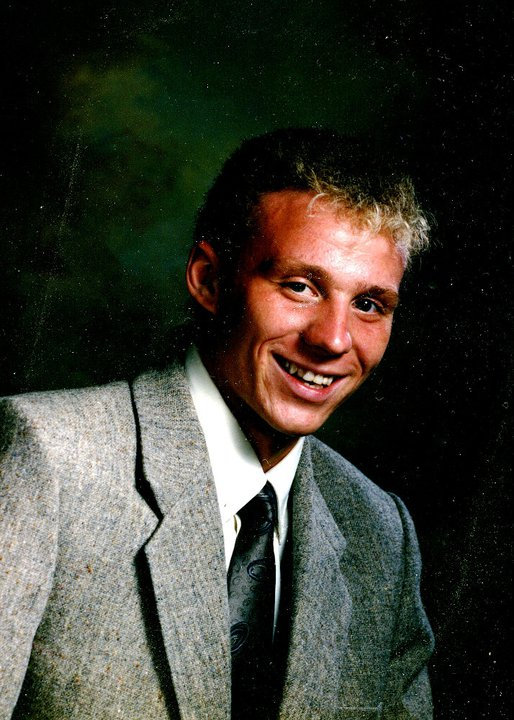
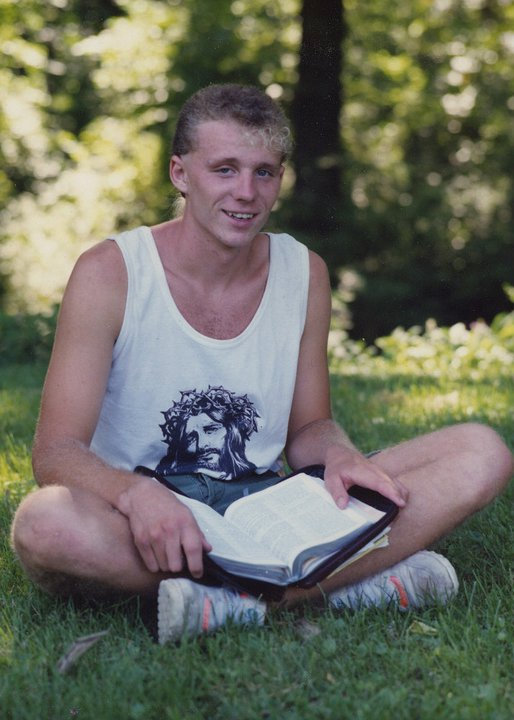
Eight by ten film. One frame at a time.
Before the bet, Ted had been teaching me for two years already. He was a working photographer who needed help, and I was a high school kid who wanted to be one. By then I was photographing for the school newspaper and yearbook, and working a part-time job as a sports photographer for The Daily Advocate. Ted let me run weddings and family sittings with him, taught me how to work an eight-by-ten film camera, taught me how to light a face so that a person looked like the version of themselves they recognized in the mirror.
He also taught me, without ever using the words, that a portrait is a contract. The person in front of the camera is trusting you with the version of themselves that the photograph will preserve. You do not break that contract. You earn it.
My own senior portrait by Ted is hanging in my home thirty-five years later. It was printed on fine art paper and it has never faded. My kids see it and do not believe I was ever that good-looking, or that skinny, or that I once had a full head of hair. I tell them their day is coming.
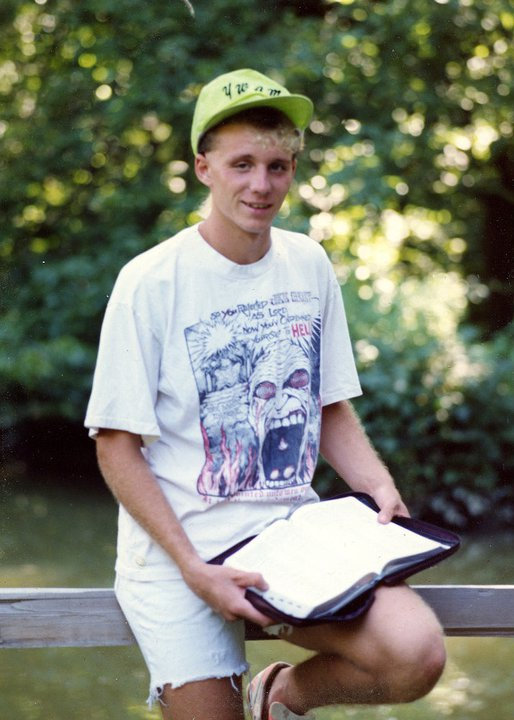
The number isn't marketing.
Eight different high schools. Almost one hundred seniors in thirty days. That is what Ted's window taught me, and the number has stayed with me ever since. I accept one hundred seniors per year, and not one more. Not because one hundred is a clever cap on a calendar. Because one hundred is the most I can give five hours of undivided attention to. The most I can drive across the Houston metro for, scout locations for, sit down at a kitchen table the night before and design a session around the senior who is going to be in front of the camera the next morning.
Some studios photograph eight hundred seniors in a season. Some photograph four hundred. There is nothing wrong with that, and the photographers who do that work are skilled at it. It is not what I do. What I do is the version of senior portraits I wish I had heard about as a parent, before I knew anything about photography. The version where one photographer learns one senior, and then makes one body of work that the senior recognizes and the family will live with.
It is the bet I made with Ted, kept as the rule of my own practice. If I cannot do it the way it deserves, I do not take it on.
Greenville, Ohio, 1990
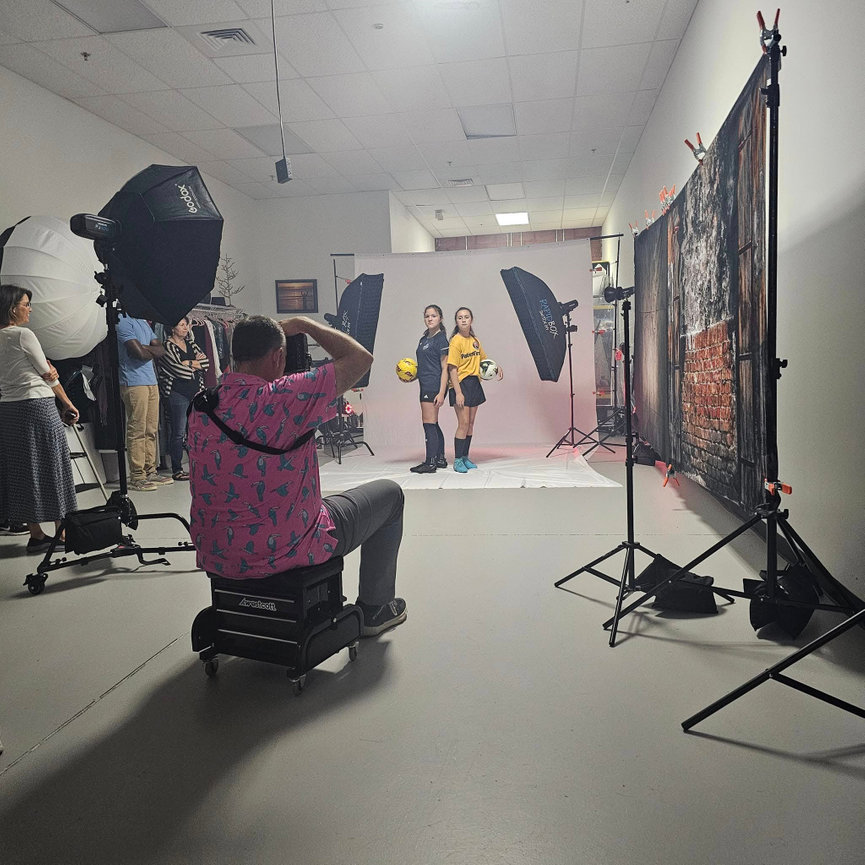
The studio comes to you.
For years I ran a traditional studio, with a camera room, a reveal room, and a front door families walked through. When I brought Swartz Portraits to Texas, I changed how the business works, on purpose.
Ninety-five percent of my families ask for location sessions. They want the Waterway, Old Town Spring, the lake at sunset, the field behind the house, not a backdrop. So the session happens where the senior's life happens. And once the session moved out of the building, keeping the consultation and the reveal inside one made no sense either.
Now both happen in your home. That is not a compromise. It is the most useful hour I spend with a family. In your living room I can see the wall above the fireplace, the light in the hallway, the space at the top of the stairs. I size and design each portrait for the exact place it will hang, at the size that room actually needs, and then I deliver it there myself and see it go up. A studio visit cannot do that. The studio came with me. It just meets you at your door.
The chapters in between.
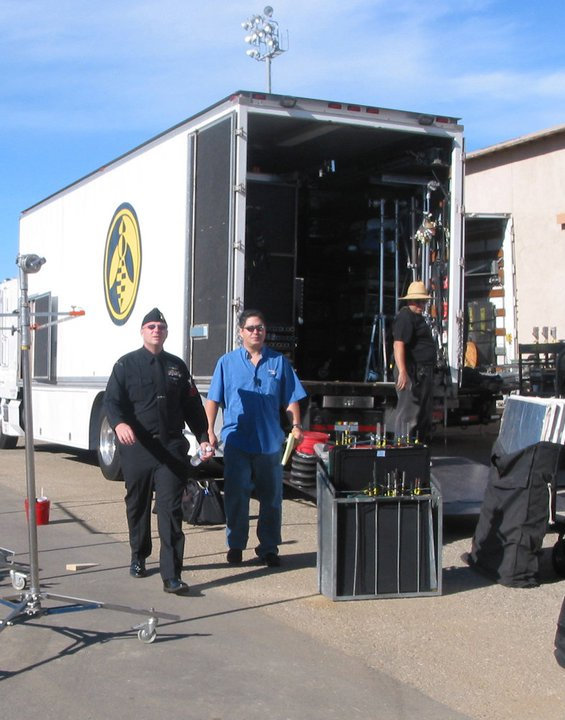
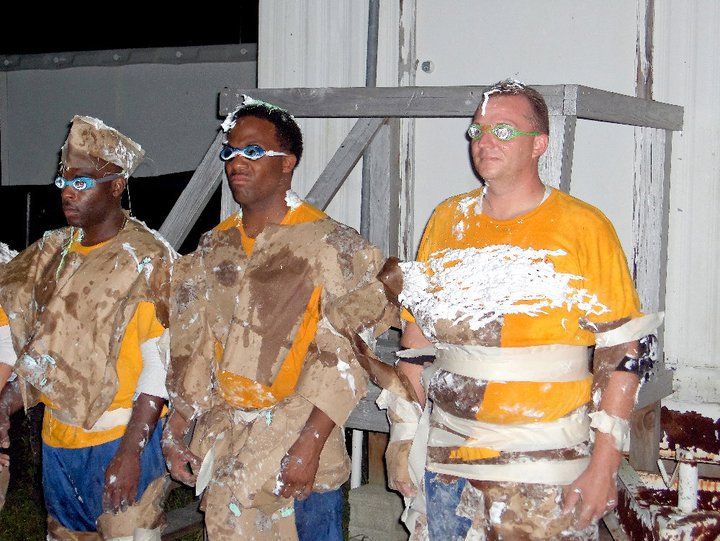
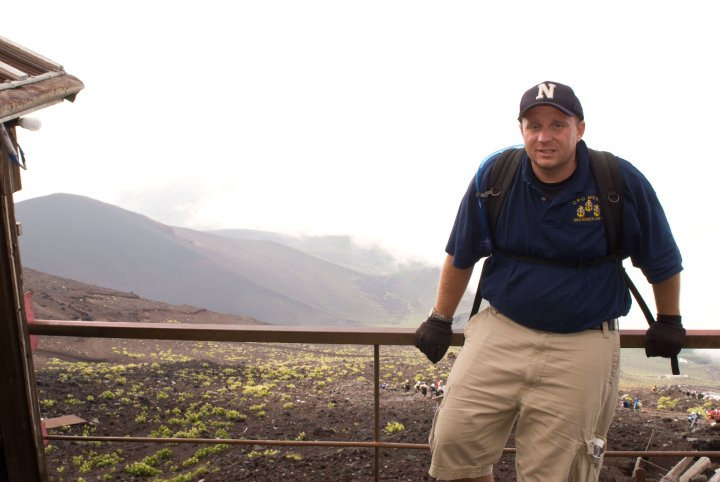
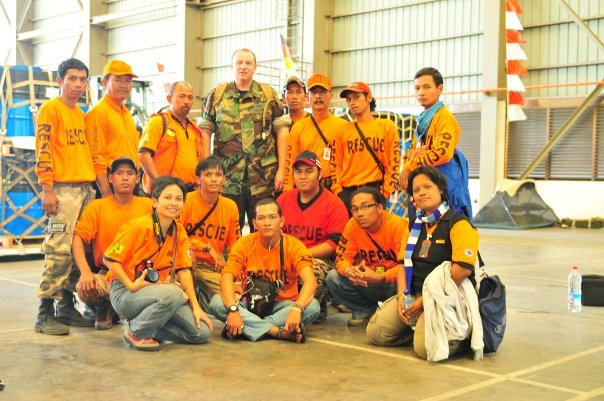
Between Ted's studio in Ohio and Swartz Portraits today, life took some interesting turns. I spent a career in the United States Navy as a photojournalist, retiring as a Chief Petty Officer after deployments across the Pacific and the Mediterranean. I spent years in the classroom as a teacher of technology and visual design, and led nearly three hundred students through an educational travel program that reached thirteen countries. I worked as a Hollywood Liaison, on set during the filming of Pearl Harbor aboard the USS Constellation, on the set of JAG, and on the red carpet at the 2004 Academy Awards interviewing A-list nominees as they walked in. And, more recently, I have become a novelist.
Sixty-five countries with a camera. Hundreds of students taught how to look at a place and see what was actually in front of them. A career in service that meant photographing people on the worst day of their lives and on the best day of their lives, sometimes in the same week. None of it was a detour from photography. All of it was preparation for it.
A senior session is five hours with one person who is on the edge of becoming somebody else. Everything I have done outside the camera room has been training for those five hours. The Navy taught me how to be calm when other people are nervous. Teaching taught me how to listen, and how to ask the question one more time when the first answer was not the real one. Hollywood taught me how to make somebody look like the version of themselves they came to be that day. Writing fiction for young readers taught me that every person is the central character of their own story, and that you do not get to tell that story for them. You serve it.


Adventures for the readers who need them most.
The Barrier Keepers is a middle-grade and young adult adventure-fantasy series about ordinary kids who discover they are not ordinary at all. I wrote it for the readers who used to be me. The kids who tear through a book under the covers at midnight. The kids who would rather build a world than sit through a worksheet. The reluctant readers who need one story to break the spell, and then they read everything in sight for the rest of their lives.
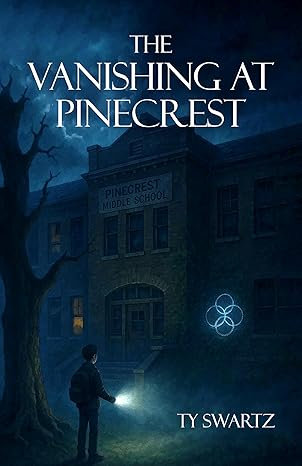
The Vanishing at Pinecrest
Twelve-year-old Sam Rivera starts at Pinecrest Middle School and discovers that students have been vanishing every twelve years, always four at a time, always in April. With his archaeologist father missing in Ecuador and only three days before the next ritual, Sam and three unlikely friends, an artist, a skeptic, and a healer, must uncover what really lives beneath the school.
View on Amazon ›
Renaissance Realms
Eight teenagers with supernatural powers and a telepathic bond discover they are anchors for each other when reality fractures. Behind a quiet park hides a 174-year-old conspiracy. The Guardians have spent centuries manipulating dimensional barriers and controlling humanity through calculated catastrophe. Now they want these eight. And they want them desperate.
View on Amazon ›The same instinct that drives a senior portrait session drives the books. Find the version of a person that is true, even when they have not yet figured out what that version is. Trust the reader to handle complicated truths. Make the story worth the time of someone who could have spent that time scrolling through a phone instead. Whether the medium is a portrait on a wall or a paperback at the bottom of a backpack, the contract is the same.
Two prints, two stories.
I do not keep a careful list of awards. The recognition is wonderful when it comes, but it is never the point. The point is the senior. The point is the parent at the reveal who has to set the portrait down for a moment. The recognition is what happens after, and only sometimes.
Two recent prints stand out, both portraits of high school seniors, both photographed the way every senior at Swartz Portraits is photographed: with up to five hours, with their own story, with the goal of something that would still be hanging in their family's home in thirty-five years.
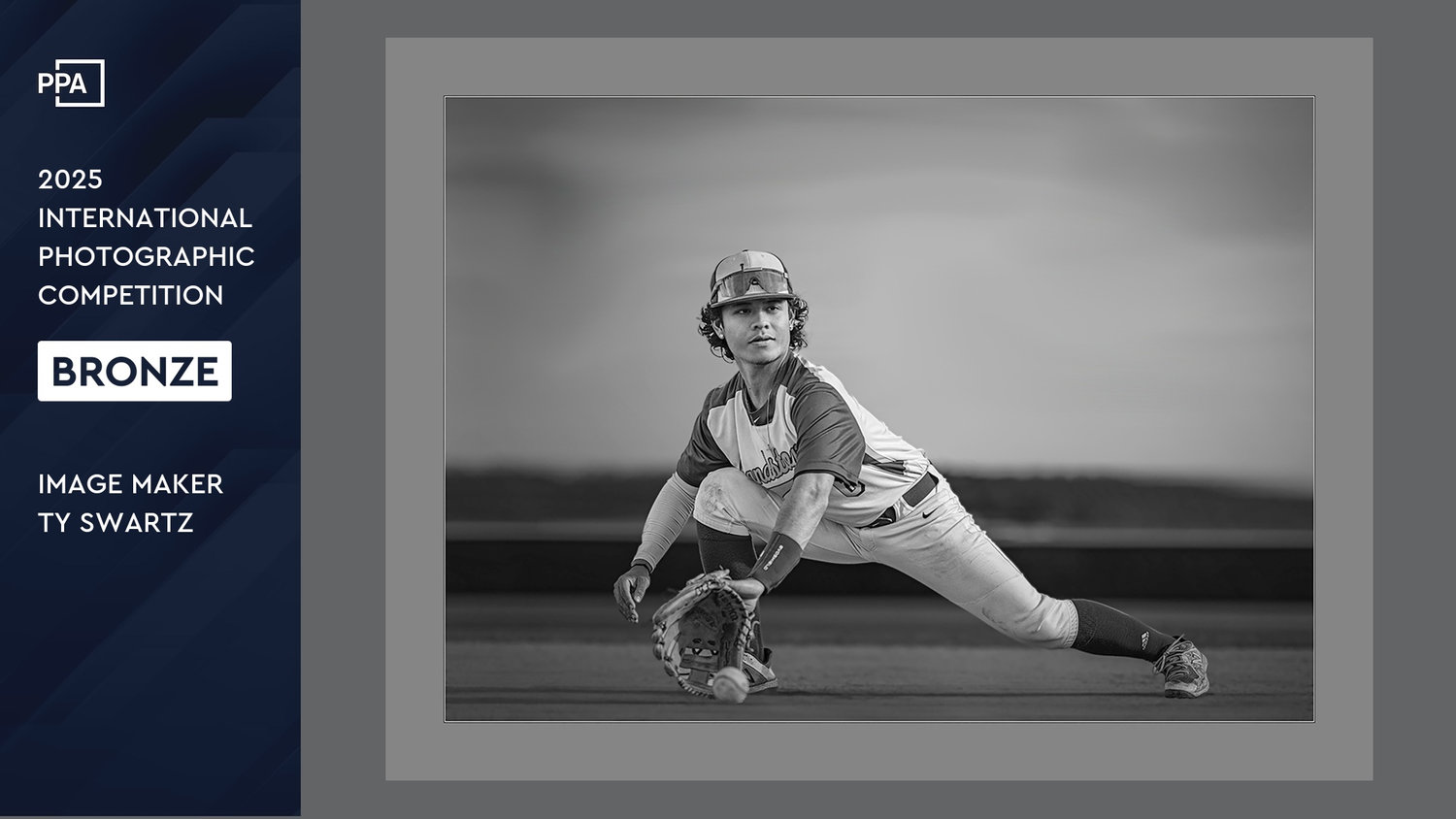
Stretch
A high school senior, his glove, and the half-second a second baseman has to catch a ball that should not be reachable. The portrait that captured it earned a Bronze Medal at the PPA International Print Competition. It went on to receive a Merit in the PPA Merit Image Review, and honors from the Texas and Virginia state associations. The same year, I was ranked nineteenth internationally as a high school senior portrait photographer.
Recognition: PPA International Print Competition Bronze Medal · PPA Merit Image Review Merit · TPPA award · VPPA award · 2025 international ranking, top 19, high school senior portrait category
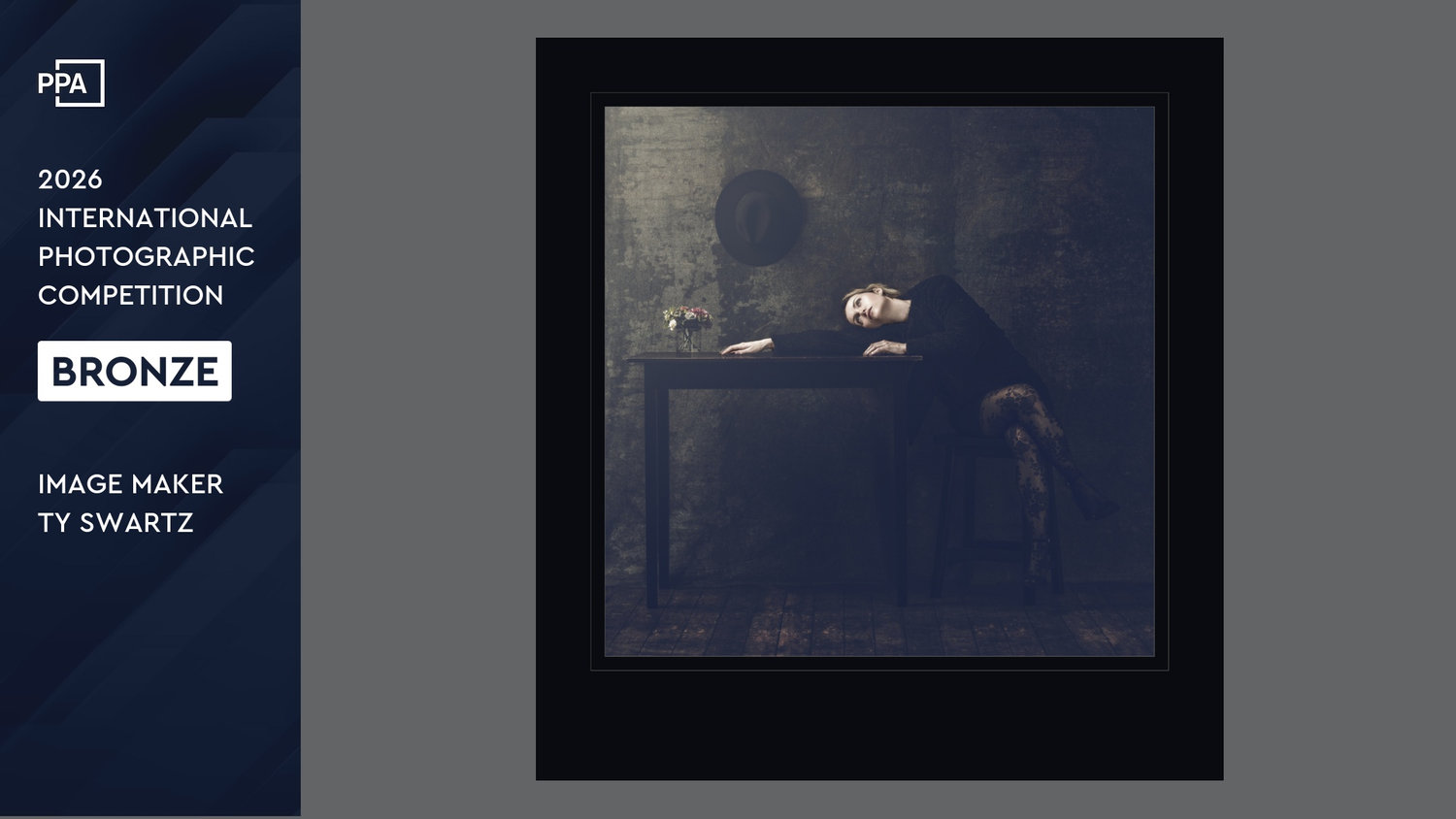
He's Gone
A senior portrait of a young woman, photographed for the version of herself she most wanted to be remembered as. The print earned a Bronze Medal at the PPA International Print Competition. The Virginia Professional Photographers Association named it Best Portrait of a Woman. The Texas Professional Photographers Association awarded it Texcellence and a Judges Choice. The senior in the portrait is the reason it exists. Everything else is footnote.
Recognition: PPA International Print Competition Bronze Medal · VPPA Best Portrait of a Woman · TPPA Texcellence · TPPA Judges Choice
Several other senior portraits have earned recognition from the PPA, the Texas Professional Photographers Association, and the Virginia Professional Photographers Association. The full list is somewhere in a drawer.
Tell me your senior's story.
Every session I take begins with the senior in front of me telling me who they are. Not their resume. Their actual self. What music is in their headphones. What they are afraid of leaving behind. What they are not afraid of anymore. Their car. Their guitar. Their teammates. The book on their nightstand. The strange thing that makes them laugh. The corner of the house they retreat to. The friend they trust the most. The teacher they will keep in touch with after graduation.
From that I design the session. Five hours. Multiple locations across The Woodlands, Spring, Conroe, and the greater Houston metro, chosen because they belong to the senior in some way, not because they photograph well for someone else's Instagram. Unlimited outfit changes, because no seventeen-year-old is only one outfit. Their world, photographed at the height of who they are right now. The version of them that already lives at home and at school but has never been documented properly.
My job is not to put my style on the senior. My job is to see the senior clearly enough that the photographs feel like a mirror. The most surprising compliment I receive at a reveal is when a senior looks at a portrait and says, quietly, "That is what I look like." It always sounds like a small revelation. It is.
When the imagination is theirs, the portrait is theirs. When the portrait is theirs, it is the one their parents will hang in the living room.
The reveal. And the silence right before it.
About a week after a session, I come back to the family's home and the senior and the parents see the finished images for the first time. I have done this a thousand times. The reveal still gets me every time.
I have watched fathers I had pegged as the unflappable type set the print down quietly because they did not trust their hands. I have watched mothers laugh and then immediately apologize for crying. I have watched grandmothers say a single sentence about a child they remembered learning to walk, and then go silent. Those reactions are not about my photographs. They are about the seventeen years the parents have invested in the person now sitting next to them at the table.
What the photograph does is give that investment somewhere to land. The toddler learning to walk. The kindergartner. The kid riding a bike. The first day of driving themselves to school. All of those people are still in there, and the portrait is the place they get to live now.
That is what I am trying to make. Not a senior picture. A place for seventeen years of becoming someone to live, on a wall in a home, for as long as the family wants to look at it. My own senior portrait by Ted is still doing that work for my parents thirty-five years later. There are days I think it is doing more work than I ever did.
Consultations and reveals are Monday through Friday at 6:00 or 8:00 pm, by appointment, in your home. Sessions are photographed on Saturdays and Sundays.
Tell me your senior's story.
Every session begins with a complimentary in-home consultation, Monday through Friday at 6:00 or 8:00 pm. There is no pressure and no obligation, only a conversation about your senior and what their portraits could be.
Apply for One of 100 Sessionsor ask a question first
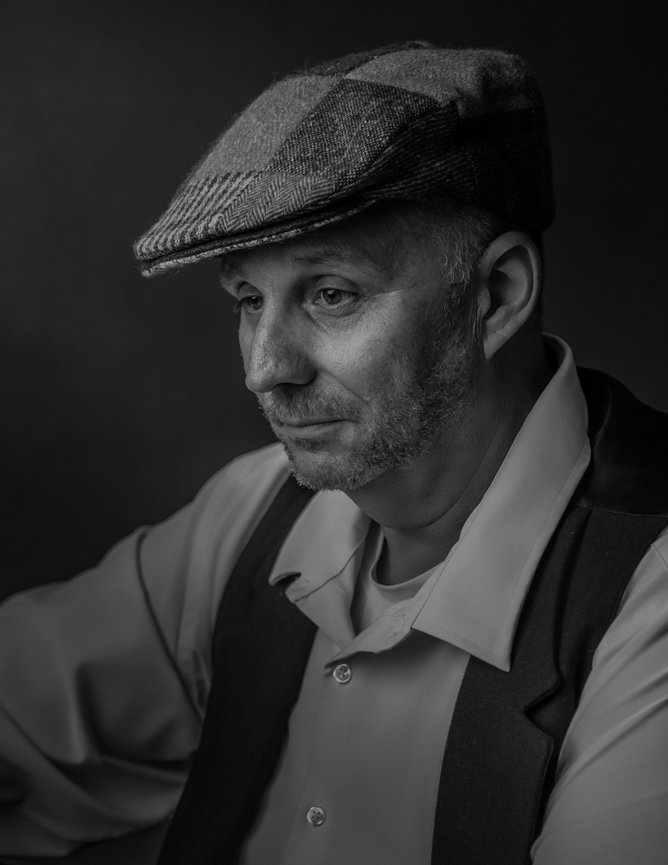
Ty
Ty Swartz, Ph.D. (abd), MBA, M.Photog.Cr., CPP, USN (ret.)